Hair quality is built from the inside out. While shampoos and routines protect the scalp, nutrition provides the raw materials for growth and strength. This article covers the most relevant nutrients, how to support them in daily meals, and how to approach sun exposure safely to support vitamin D without damaging skin or scalp.
Protein: the foundation of hair structure
Hair is primarily made of keratin, a protein. If your diet is low in protein, hair can become weaker and thinner over time. Aim to include a protein source with each meal—eggs, fish, poultry, legumes, or dairy depending on your preference. Consistent intake matters more than occasional high‑protein days.
Spreading protein across the day helps the body use it efficiently. A small protein portion at breakfast, lunch, and dinner is often more effective than a single heavy protein meal.
Iron and zinc: small nutrients, big impact
Iron supports oxygen delivery, while zinc contributes to tissue repair and oil‑gland function. Low intake can affect hair quality and scalp balance. You can find iron in red meat, lentils, and leafy greens, and zinc in pumpkin seeds, seafood, and nuts. If you’re plant‑based, pair iron sources with vitamin C to improve absorption.
Omega‑3s and hydration
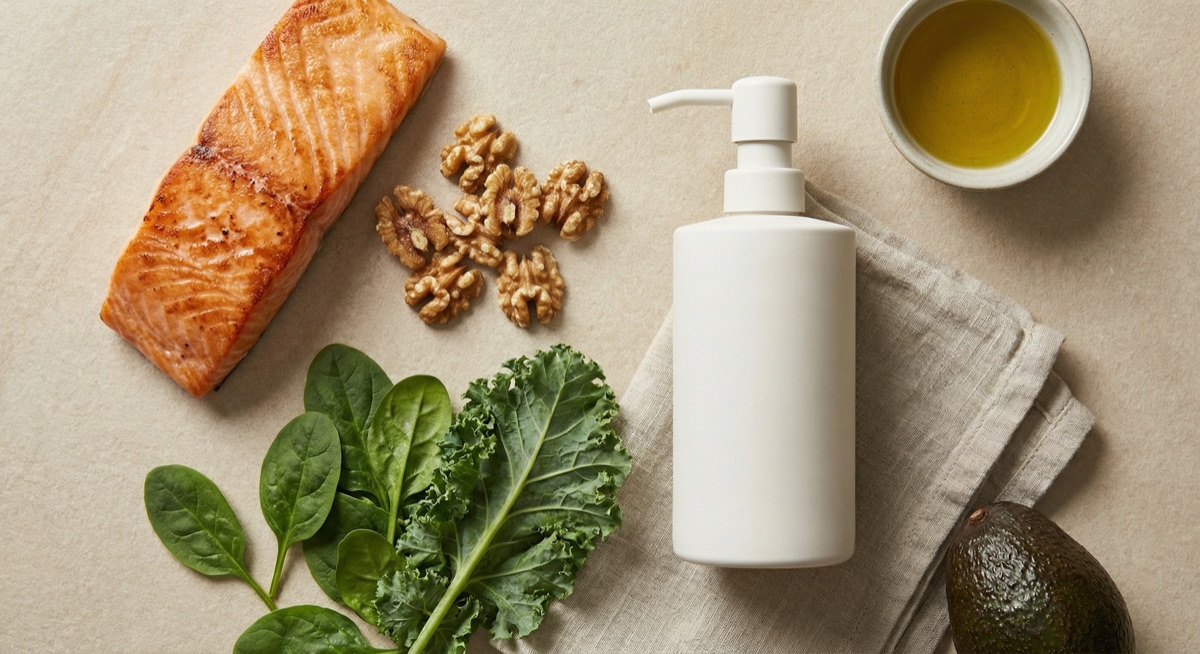
Omega‑3 fatty acids support skin and scalp hydration. If your scalp feels dry or irritated, increasing omega‑3 intake can help. Salmon, sardines, chia seeds, and walnuts are reliable sources. Combine this with steady water intake throughout the day—dehydration shows up in the scalp before you notice it elsewhere.
Vitamin D and sun exposure
Vitamin D is linked to healthy skin and hair function. The body produces it through sun exposure, but the goal is balance. Short, consistent exposure is better than long, intense sessions. A few minutes of morning or late‑afternoon sunlight can help many people, but it depends on location, season, and skin type.
Food sources (like fatty fish and fortified dairy) can complement sun exposure, especially in winter. If you rarely see the sun, consistent diet choices become even more important.
Men with thinning hair should be extra mindful of scalp sun exposure. A light SPF spray or a breathable cap protects the scalp without overheating it.
Micronutrients that often get overlooked
B‑vitamins (especially B12 and biotin), vitamin E, and selenium also play supportive roles. You don’t need large doses—just a steady, balanced intake through whole foods. Over‑supplementing can backfire, so use supplements only if your diet is lacking or if a clinician suggests them.
If you’re unsure about deficiencies, a basic blood test can clarify iron, B12, and vitamin D status. It’s better to measure than guess, because excessive supplementation can be as unhelpful as deficiency.
Simple daily food pattern
- Protein at every meal
- One iron source daily (meat or legumes)
- Omega‑3 source 2–3 times per week
- Colorful vegetables for micronutrients
- Water spread across the day
Hydration, caffeine, and alcohol
Hydration supports scalp comfort. If you drink a lot of coffee or alcohol, make sure you’re balancing it with water throughout the day. The scalp is quick to show dehydration with tightness or flaking.
Consistency beats intensity
Hair responds slowly. It’s normal to need weeks or months to notice changes. The most reliable strategy is a simple, sustainable routine: balanced meals, steady hydration, and safe sun exposure. Combined with gentle hair care, this creates the best environment for long‑term scalp and hair health.
Recommended shampoo
A premium strengthening wash to complement a nutrient-focused routine.