The scalp is skin. When it’s irritated, dry, or inflamed, hair quality suffers. The good news is that most scalp issues come from a small set of everyday habits. This guide focuses on what to avoid—washing frequency, water temperature, drying, brushing, and timing—so your scalp stays calm and your hair stays strong.
Avoid washing every day (unless you truly need to)
Daily washing can strip protective oils that keep the scalp balanced. For most men, every 3–4 days is enough. If you sweat heavily or use styling products, you can still rinse daily with water while washing with shampoo less often. The goal is to clean the scalp without over‑cleansing it.
Over‑washing can also trigger rebound oiliness, where the scalp produces more oil to compensate. Reducing frequency often helps the scalp rebalance within a few weeks.
Skip hot water
Hot water feels good, but it weakens the scalp barrier and can increase dryness and irritation. Lukewarm water cleans just as well without that damage. If you love a hot shower, keep the heat for your body and finish the hair rinse cooler.
Don’t scrub aggressively
Scratching with nails can cause micro‑irritation and make the scalp more sensitive. Instead, use your fingertips and massage gently for 60–90 seconds. You’re aiming to lift buildup and stimulate circulation, not “scrub” the scalp clean.
Avoid rough drying
The hair shaft is more fragile when wet. Rubbing hard with a towel or blasting heat can cause breakage and frizz. Instead, gently press moisture out with a towel, then air‑dry or use low heat. If you need a dryer, hold it at a distance and keep it moving.
Scalp friction adds up. Tight hats, rough pillowcases, and frequent scratching can all increase irritation. A breathable hat outdoors and a smooth pillowcase at night reduce friction and help the scalp stay calmer.
Mechanical damage: cotton towels vs. microfiber
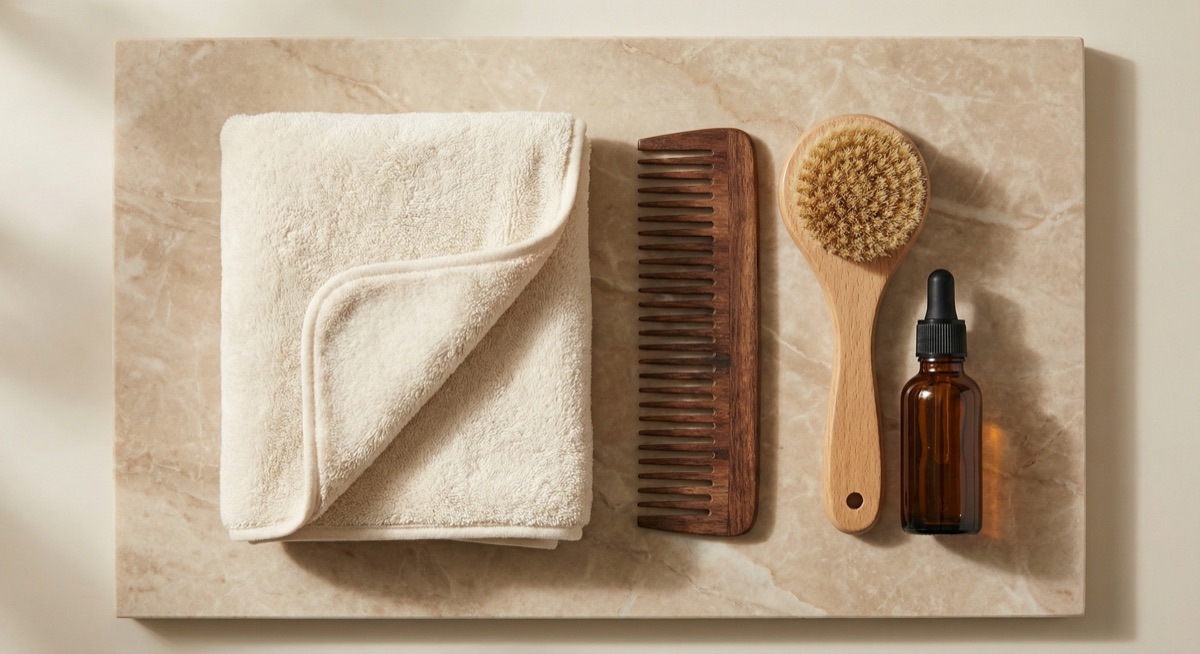
Rough cotton towels can create micro‑tears in wet hair and increase breakage. A microfiber towel reduces friction and absorbs water without rough scrubbing.
Better drying habits
- Use a soft towel (microfiber if possible).
- Pat and press—don’t rub.
- Choose low heat and avoid high‑heat blasts.
Don’t brush aggressively or too often
Brushing is healthy when done gently, but aggressive brushing can damage the cuticle and irritate the scalp. Use a wide‑tooth comb on wet hair and a soft brush on dry hair. Start from the ends and work upward to avoid pulling.
Tool choice matters. Stiff plastic bristles can scratch the scalp and create micro‑irritation, while softer bristles glide without tugging. If you feel pulling, switch to a gentler brush or comb and reduce the number of strokes.
Timing matters
Brushing immediately after a hot shower, when hair is soft and swollen, increases breakage. Let hair cool slightly first. Also avoid heavy styling products right after washing; give the scalp a few hours to breathe.
If you train or sweat heavily, rinse with water after workouts and shampoo later. This avoids salt buildup without over‑cleansing your scalp.
Products: avoid harsh detergents and heavy buildup
Shampoos with strong sulfates can irritate sensitive scalps, and heavy styling products can clog follicles when not rinsed properly. Choose sulfate‑free formulas and use a light cleanser that rinses clean. If you need product hold, apply to the ends rather than the scalp.
A simple routine beats a complex one. Two gentle products used consistently will outperform a shelf full of harsh or highly fragranced formulas that irritate the scalp.
Quick avoidance checklist
- Avoid daily shampooing unless your scalp is very oily.
- Skip hot water; use lukewarm instead.
- Don’t scrub with nails or brush aggressively.
- Pat dry and use low heat if needed.
- Use gentle, sulfate‑free cleansers.
Most scalp improvements come from consistency, not complex routines. Reduce the harsh inputs, keep the scalp calm, and your hair has a better chance to stay strong over time.
Recommended shampoo
A premium daily formula that supports stronger, healthier hair.