If you are noticing thinning hair, persistent itchiness, or excess oil, the culprit is not just genetics - it is likely sitting in your shower right now. Most commercial shampoos are formulated for shelf-life and heavy foam, not for long-term follicle health.
At KURE, we have analyzed the chemical profiles of over 50 leading men’s products. Here is the definitive blacklist of ingredients that are sabotaging your scalp environment.
1) The "Strippers": sulfates (SLS & SLES)
Sodium Lauryl Sulfate (SLS) is a harsh detergent used to create foam. While it feels satisfying, it strips away the sebum barrier - the natural oil that protects your scalp.
The damage: irritation, redness, and weakened hair shafts that break easily.
The swap: look for Decyl Glucoside or Sodium Lauroyl Methyl Isethionate.
2) The "Suffocators": non-soluble silicones
Ingredients like Dimethicone create a fake shine by coating the hair in a plastic-like film.
The damage: this film traps bacteria and prevents moisture from reaching the follicle, leading to "suffocated" hair growth.
3) The "Hormone Disruptors": parabens
Used as preservatives (Methylparaben, Propylparaben), these chemicals can mimic estrogen in the body.
The damage: while the direct link to hair loss is still being studied, systemic inflammation from parabens is a known enemy of healthy follicles.
4) The "Irritants": synthetic fragrances (parfum)
"Mountain Breeze" or "Cedarwood" scents are often a cocktail of phthalates.
The damage: they are the #1 cause of contact dermatitis on the scalp, leading to chronic scratching which physically uproots hair.
5) The "Dehydrators": isopropyl alcohol
Often used to make shampoo dry faster or feel "light."
The damage: it pulls moisture out of the hair fiber, making it brittle.
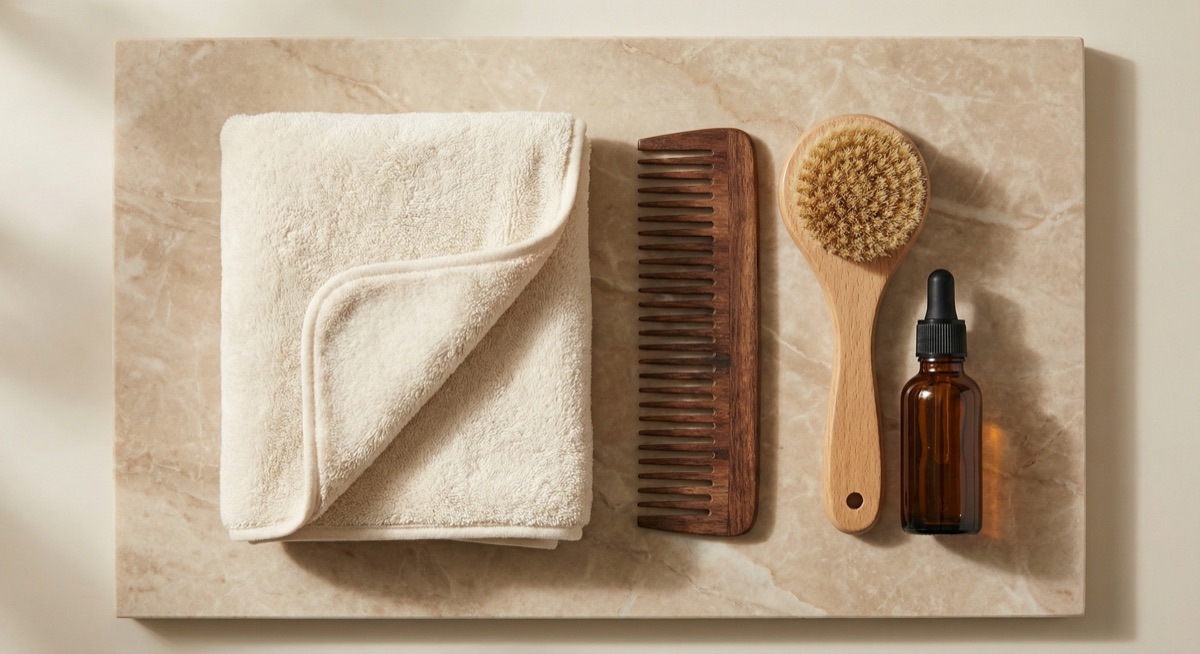
The pro tip: after washing with an alcohol-free formula, never rub your hair with a rough cotton towel. Use a Microfiber Hair Towel to pat dry and preserve the hair’s structural integrity.
Quick comparison: what to choose vs. what to trash
| Ingredient type | Avoid (the blacklist) | Choose (the scalp-safe path) |
|---|---|---|
| Cleansers | SLS, SLES, ALS | Coco Glucoside, Sarcosinate |
| Conditioners | Dimethicone, Cyclomethicone | Argan Oil, Shea Butter |
| Preservatives | Parabens, Quaternium-15 | Essential Oils, Sodium Benzoate |
How to transition to a clean routine
Switching to a sulfate-free, clean routine often involves a "detox phase." Your scalp might feel oilier for the first week as it recalibrates its oil production.
To speed up the process:
- Exfoliate: use a scalp massager to lift years of buildup.
- Hydrate: drink more water and use a pH-balanced, natural shampoo.
- Dry smart: stop heat-drying or rough-towel drying.
Ready to fix your routine?
Take our 60-second scalp quiz to find the exact product combination for your hair type.
Recommended shampoo
Reset buildup gently after removing harsh ingredients.